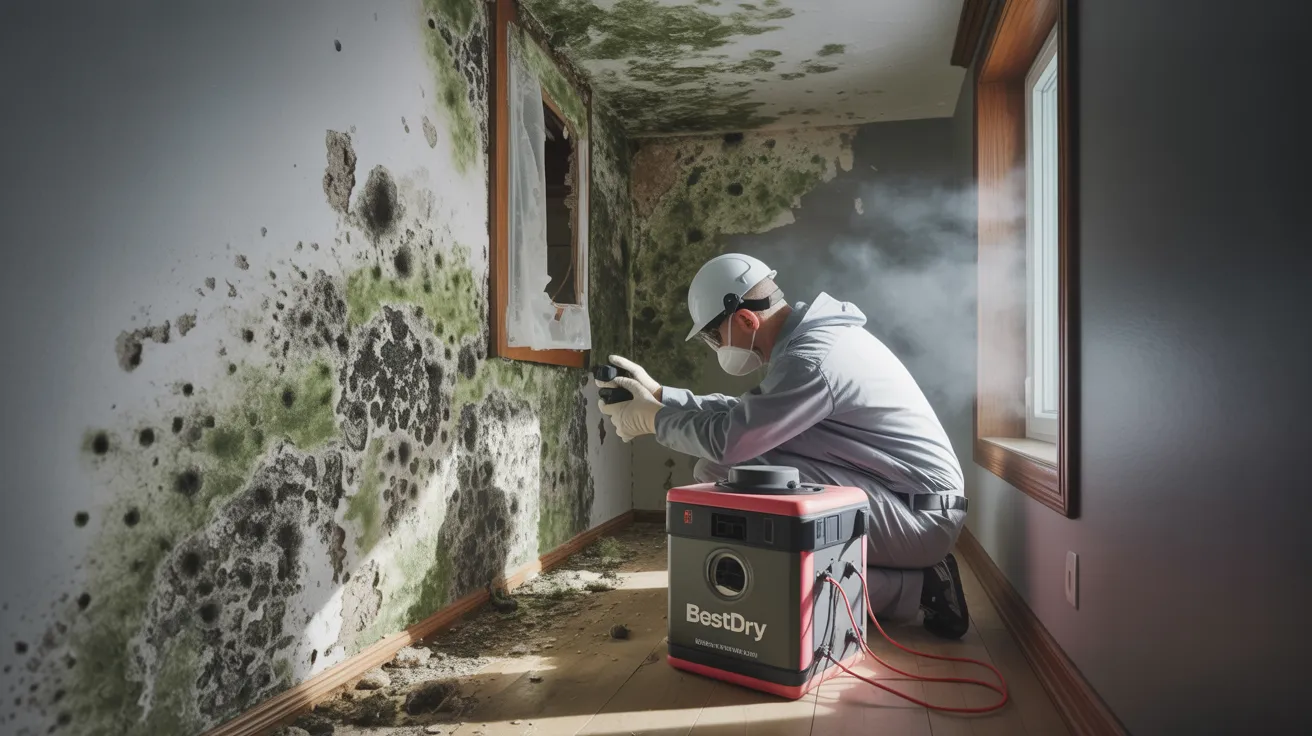
Consequences of Untreated Mold
Why waiting to address mold is one of the costliest mistakes homeowners make.
Mold is one of those problems that seems small at first. You notice a dark spot in your bathroom corner or a musty smell in your basement, and you think, "I'll deal with that later." But here's what we've learned from over 20 years in the water restoration and mold remediation business: waiting is one of the costliest mistakes homeowners make.
Critical Health Consequences
Untreated mold releases spores into your air continuously, and your family breathes these spores every day.
Structural Damage to Your Home
Beyond health concerns, untreated mold causes serious physical damage to your home's structure. Mold feeds on organic materials, eating away at the very things holding your house together.
Wood Framing & Joists
Breaks down cellulose, weakening structural integrity. A beam that should last 100 years might fail in 5-10 years.
Drywall & Insulation
Materials absorb moisture and become mold food. Drywall loses structural properties and becomes crumbly.
Subflooring
Mold underneath floors goes undetected until the floor becomes spongy or buckles.
HVAC Systems
Mold in ductwork spreads spores throughout entire home every time system runs.
Financial Impact of Delayed Remediation
Caught Early
$500 - $2,000
Small problem addressed immediately
After 6 Months
$5,000 - $15,000
Same problem left untreated
Severe Cases
$50,000+
When structural elements are compromised
Seasonal Mold Growth Patterns
Winter Burst Pipes & Spring Mold
Winter brings freezing temperatures that cause pipes to burst. Come spring, as temperatures warm and humidity increases, mold growth accelerates rapidly in those winter-damaged areas. Homeowners who delay addressing winter water damage face severe mold problems by spring.
Summer Moisture Development
Summer brings humidity levels that create perfect conditions for mold growth. Even without obvious water problems, summer humidity can cause condensation and moisture buildup in basements, crawl spaces, and bathrooms. Proper ventilation and dehumidification become critical.
Professional Remediation Timeline
Don't wait to call professionals after water damage. The first 24 to 48 hours are critical.
Water damage occurs; professional mitigation prevents mold
Without proper drying, mold spores begin germinating
Visible mold colonies appear
Mold spreads significantly; structural damage begins
Prevention Strategies
Frequently Asked Questions
How quickly does mold grow after water damage?
Mold spores can begin germinating within 24-48 hours of water exposure. Visible mold colonies typically appear within 3-7 days if moisture isn't completely removed. This is why we emphasize immediate action after any water intrusion.
Can I remove mold myself, or do I need professional remediation?
While small surface mold can sometimes be cleaned, professional remediation is strongly recommended. Mold often grows inside walls where you can't see it, and disturbing mold releases spores throughout your home. DIY efforts rarely address the moisture source, so mold returns.
Will my homeowner's insurance cover mold remediation?
Insurance coverage depends on the mold's cause. If mold resulted from a sudden, covered event like a burst pipe, remediation may be covered. However, mold from slow leaks or poor maintenance typically isn't covered. We work directly with insurance companies to help determine coverage.
Don't Let Mold Become a Bigger Problem
Every day that passes allows mold to spread and causes more damage. See our mold removal services, learn about mold severity and health risks, or explore water damage restoration. We also offer professional leak detection to catch hidden moisture early.
Call 206-620-0070 Now