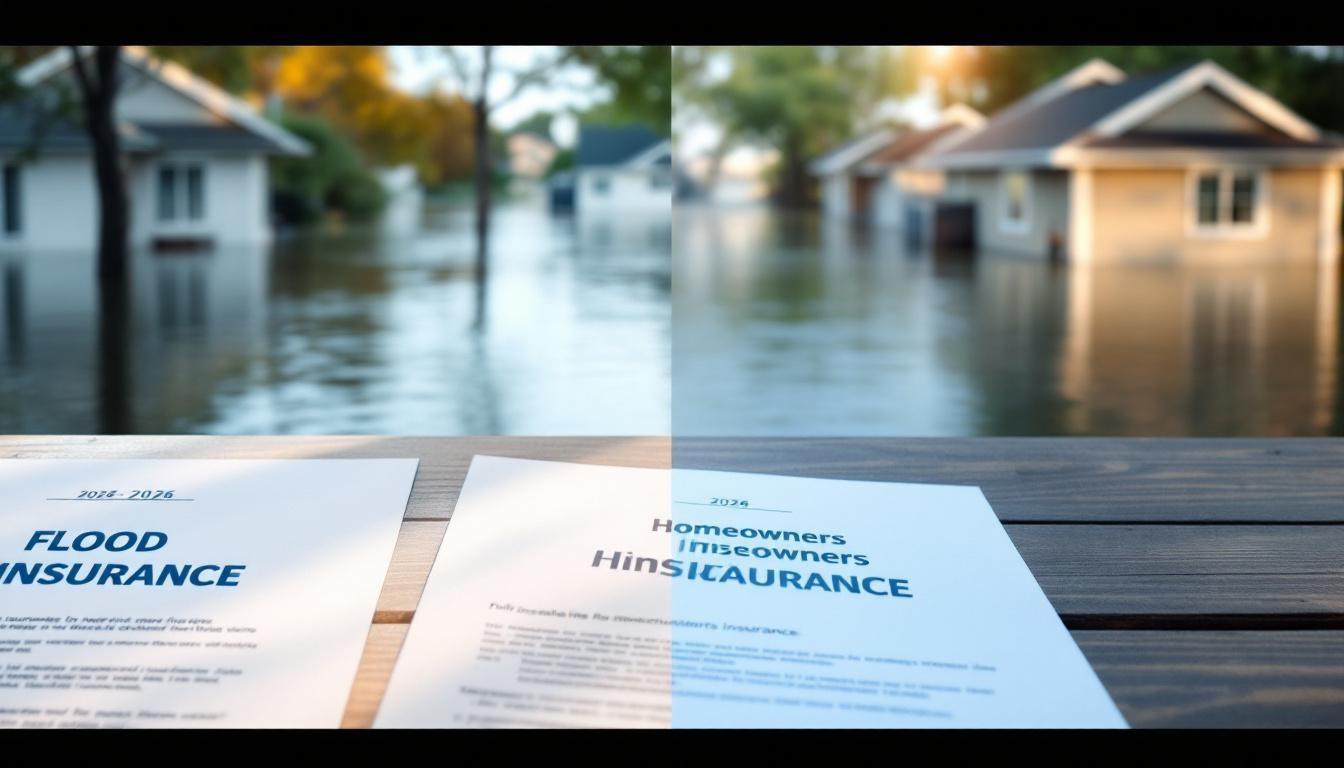
Flood Damage vs. Water Damage Insurance: What Homeowners Need to Know
June 22, 2026 · 13 min read
Your basement just flooded. Water is standing two inches deep across the floor. You call your insurance company, ready to file a claim — and learn that your homeowner's policy doesn't cover this type of water damage. The distinction between "water damage" and "flood damage" in insurance terms has caught millions of homeowners off guard, often at the worst possible moment.
What Standard Homeowners Insurance Covers
Your standard homeowner's policy (HO-3) covers sudden and accidental water damage from internal sources. This typically includes:
The key phrase is "sudden and accidental." If a pipe burst unexpectedly, you're covered. If a pipe leaked slowly for months and you ignored it, you're likely not covered. Insurance companies expect homeowners to maintain their property and address known issues promptly.
What Flood Insurance Covers
Flood damage — defined as water that enters your home from outside, rising from the ground — requires a separate flood insurance policy. This is typically purchased through FEMA's National Flood Insurance Program (NFIP) or a private flood insurer.
Flood insurance covers damage from:
For Washington homeowners near Issaquah Creek, the Snoqualmie River, or any waterway, flood insurance is strongly recommended even if you're not in a FEMA-designated flood zone. About 20% of all flood claims come from outside high-risk flood areas.
The Gray Areas: Where Claims Get Denied
The most contentious insurance disputes often involve situations that fall between clear "water damage" and "flood damage":
Not covered unless you add a sewer backup endorsement (typically $50–$150/year)
Denied — considered a maintenance issue, not sudden/accidental damage
Usually classified as flood or groundwater — not covered by standard policies
Covered only if the storm physically damaged the window or opening first
Most policies exclude or severely limit mold coverage unless addressed within 48–72 hours
How to File Water Damage Claims the Right Way
How you handle the first 24–48 hours after water damage significantly impacts your claim outcome. Here's what to do:
1. Document Everything Immediately
Before touching anything, take extensive photos and video of all damage. Photograph the source of the water, the affected areas, damaged belongings, and any standing water. This evidence is critical for your claim.
2. Mitigate Further Damage
Your policy requires you to take reasonable steps to prevent additional damage. This means shutting off water, moving belongings out of harm's way, and beginning water removal. Failure to mitigate can be grounds for claim denial.
3. Notify Your Insurance Promptly
Call your insurance company within 24 hours of discovering the damage. Most policies have prompt-notice requirements, and delays can jeopardize your claim.
4. Choose Your Own Restoration Company
You are not required to use your insurance company's recommended contractor. An independent restoration company like BestDry works for you, not the insurer, and will document damage thoroughly to support your claim. Learn more about our insurance claims assistance.
5. Keep Records of All Communication
Document every conversation with your insurer — dates, names, what was discussed. Save all emails and letters. This paper trail protects you if disputes arise.
Understanding TPAs (Third-Party Administrators)
Many insurance companies now outsource claims management to Third-Party Administrators (TPAs). While TPAs handle the paperwork, they often operate with aggressive cost-containment targets that can work against you:
- TPAs may undervalue the scope of damage to minimize the payout
- They may recommend less thorough restoration methods
- Their "preferred contractors" are chosen for cost efficiency, not quality
- They may pressure you to accept a settlement before full damage assessment
Having your own restoration company provide independent documentation gives you leverage. BestDry's detailed damage assessments, moisture readings, and photo documentation have helped hundreds of King County homeowners get the coverage they deserve. Explore our Claims Concierge Service for full support.
Quick Reference: Water Damage vs. Flood Damage
| Scenario | Homeowner Policy | Flood Insurance |
|---|---|---|
| Burst pipe in kitchen | Covered | N/A |
| Washing machine overflow | Covered | N/A |
| Roof leak from storm | Covered | N/A |
| River flooding into basement | NOT Covered | Covered |
| Heavy rain ground flooding | NOT Covered | Covered |
| Sewer backup | Endorsement needed | NOT Covered |
| Gradual pipe leak (months) | NOT Covered | NOT Covered |
| Sump pump failure during storm | Endorsement needed | Covered |
Need Help With a Water Damage Claim?
BestDry handles restoration and documents the loss thoroughly. We document all damage and coordinate with your insurer on the scope of our work — no shortcuts.
Call 206-620-0070Related Articles
Frequently Asked Questions
Water Damage? We Handle the Documentation Too.
BestDry provides 24/7 restoration and thorough insurance documentation support across King County. One call covers everything.
Call 206-620-0070